realisedevelopment.net

Just another WordPress site

121s and the Return on Investment in Relationships

January 18, 2008 by admin

Tom Peters encourages managers to obsess on R.O.I.R – the Return on Investment in Relationships.

Usually what has to be invested is not cash – but time. And the challenge is to invest that time effectively.

For me, without doubt, the most effective tool for ROIR with employees is the 121. These are structured, documented 30 minute meetings held with each member of staff, every week. They provide the most effective ROIR with employees that I have ever seen.

ROIR through 121s comes in many forms:

  1. increased staff retention
  2. improved productivity
  3. recognition and acknowledgement of progress
  4. appreciation of those who are performing well
  5. identification of under performance and early resolution
  6. promotion of behaviours that reinforce strategic goals and values
  7. increased tempo of coaching to develop potential and performance
  8. deeper professional relationships
  9. increased trust
  10. increased influence
  11. increased responsiveness
  12. better support of team members in their work
  13. conduit for ideas from the front line to be heard and acted upon
  14. management support for every member of the team – every week
  15. improved communication and focus on what matters
  16. progress made and recognised on a weekly basis
  17. increased sense of urgency in the team
  18. encourage individuals to think through their contribution to team or organisational objectives
  19. increased initiative and enterprise
  20. planning remains flexible and dynamic
  21. documentation makes performance reviews simpler and less contentious
  22. barriers to high performance are removed
  23. factors contributing to poor performance are identified and resolved
  24. formal opportunities for delegation
  25. feedback – both given and received
  26. increased employee engagement
  27. improved knowledge management and knowledge sharing
  28. better talent management and development
  29. increased creativity
  30. more responsibility taken voluntarily by more people
  31. reduced absenteeism
  32. more diversity as 121s recognise that ‘one size fits one’

Perhaps some of these are things that you as a manager need to work on. If you are already using 121s then think how you can use them more effectively for the things that matter most to you and your business.

If you are not already using 121s then you have a tremendous opportunity to improve your management practice.

By the way – additions to the list are very welcome!

Filed Under: Leadership, management Tagged With: 121s, change, coaching, communication, decision making, delegation, enterprise, feedback, Leadership, learning, management, one to ones, passion, performance improvement, performance management, training

The Limits of Lean?

January 16, 2008 by admin

Lean

Earlier this week I went to ‘An Evening with Simon Hill’. Drawing on his experience of manufacturing industry and Yorkshire Forward, Simon Hill, Executive Director of Business at Yorkshire Forward talked about strategic business improvement using ‘Lean Principles’. Simon chose not to offer a quick reminder of what these Lean Principles are – leaving a proportion of the audience in the dark. As a reminder they are:

  1. Specify what creates value from the customers’ perspective
  2. Identify all the steps along the process chain
  3. Make those processes flow
  4. Make only what is pulled by the customer
  5. Strive for perfection by continually removing waste

With its origins in the world of total quality management Lean Principles provide a wonderful way to ensure efficient product or service delivery by allowing the whole business process to be analysed and made efficient. It emphasises systems, compliance, analysis and objectivity in pursuit of the perfect process. It really is scientific management for the late 20th Century. It is one of several business improvement tools that can help an organisation with one of its purposes – that of the efficient delivery of a product or service.

However increasingly efficiency is not the only game in town. Indeed it is not even the main game for most organisations. Renewal, re-invention and transformation are increasingly the key drivers of sustainable value creation in modern knowledge based economies. If I heard Simen rightly then after a considerable investment of money and time in implementing Lean his business had just about managed to stand still. Now this is an great achievement for a manufacturer of automotive components in South Yorkshire – but I doubt if it carries the seeds for a major economic re-birth.

My concern is the ‘story’ that Lean tells about the nature of business and enterprise. That it is about analysis, rationality, incremental improvement and mediocrity – giving the customer just what they ask for – when they ask for it. It is that the expectations of the customer should drive the production of the organisation. And Lean is not just a set of tools – it is a management philosophy – a culture. It becomes the way we think and act.

Andrew Mawson – one of the UKs most outstanding social entrepreneurs tells of the first time he asked some members of his community what they would really like to do. It turned out that they aspired to go on a day trip to the coast. Fair enough thought Andrew and worked with them to make it happen. After the trip had been undertaken he asked them what they would like to do next? And the reply came – ‘Let’s go on another trip to the (same) coast’! Let’s do it again! Andrew recognised that the aspirations of his customers were narrow. That he could provide experiences far more powerful and effective in driving community development. He understood that they had no real idea of what was possible. So he proposed that their next project was to be a journey across the Sinai desert. As their supplier he transformed their ideas of what could be achieved based on his on his knowledge, experience and expertise. This would never had happened had been trained in Lean principles.

And now Lean Simon tells us Lean consultants are being engaged by Yorkshire Forward to increase organisational efficiency. No doubt pieces of paper will soon be travelling less far on their journey through the offices, being touched by fewer people and processes generally more efficiently. And many of the employees perceptions will be reinforced that their role is not to facilitate the entrepreneurial re-birth of the region – but to design and administer effective bureaucratic processes.

For me business is about emotion, aspiration, imagination, passion, energy and risk. I am not making an argument for waste (although I do often find myself encouraging clients to ‘create slack’) but I am arguing for cultures that favour action and re-invention over perfection. If the price of Lean is a culture that favours analysis and incrementalism over imagination, re-invention and risk taking then I for one find it a price I am not prepared to pay.

At the end of the presentation I asked Simon whether he really felt that Lean held the answers to sustainable competitiveness in knowledge based business – whether it could drive the creativity and innovation necessary to compete in the future. And he answered ‘ No!’.

Filed Under: Leadership, management Tagged With: 5 principles, change, culture, decision making, diversity, enterprise, improvement, Leadership, lean, learning, management, passion, performance improvement, performance management, time management, Values, values

Enterprise Options

January 14, 2008 by admin

This week-end I got to spend a few hours with a group of people who are being helped to plan and a start their own businesses through a funded programme to support enterprise and entrepreneurship.

It is clear that every member of the group has the passion and skills required to do something special. What is less clear is that the option of ‘starting their own business’ is necessarily the best way for them to achieve their goals. For some this probably does make sense. For others they may be able to do what they want to to do by working with or for someone else.

I think this shows an important lesson for those interested in promoting enterprise. The first thing to work on is helping people to get clear on what they want to achieve. What does the dream feel and look like? What resources do have to help make it happen? What resources will you need? What experience might you need to get under your belt before you start your own business?

Then you can move on to a consideration of the best way of making it happen. Do you need to start your own business – or are there organisations already out there who might take you and your idea on? Do you need to leave an existing job in order to make your mark, or could you interest your current employer in supporting some intrapreneurship? (Intrapreneurship is about setting up new products or services within an existing enterprise – many organisations are desperately struggling to see how best they can find and support intrapreneurs.)

My fear is that in the rush to deliver ‘project goals and targets’ some of the wider options for pursuing enterprise dreams might get forgotten.

Filed Under: enterprise, entrepreneurship Tagged With: enterprise, entrepreneurship

Myths of Entrepreneurship

January 11, 2008 by admin

Great post here on Guy Kawasaki’s blog by Scott Shane.  Does anyone know how these myths stack up on this side of the pond?

Filed Under: enterprise, entrepreneurship Tagged With: enterprise, entrepreneurship

Entrepreneurship Illusions

January 8, 2008 by admin

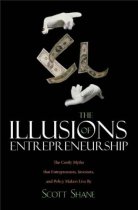
Illusions of Entrepreneurship

Scott Shane from Case Western has just published (in the US) The Illusions of Entrepreneurship: The Costly Myths That Entrepreneurs, Investors, and Policy Makers Live By.

“People start businesses based on the myths we tell ourselves about entrepreneurship and then are hurt when confronted by reality. Investors believe these myths and invest money and they’re disappointed when they don’t hold true. Policy makers make policy based on these myths and then wonder why the economy isn’t growing with all these entrepreneurs now in it.”

Try taking his entrepreneurship test. I scored a massive 50%!

Clearly care will have to be taken in translating the US research to the UK context – but I am sure this will provoke some interesting conversations. You can pre-order the book here.

Filed Under: enterprise, entrepreneurship Tagged With: enterprise, entrepreneurship, policy

  • « Previous Page
  • 1
  • …
  • 46
  • 47
  • 48
  • 49
  • 50
  • …
  • 53
  • Next Page »

Recent Posts

  • Hello world!
  • The Challenges of ‘Engaging Community Leaders’
  • Are rich people less honest?
  • 121s – The single most effective tool for improving performance at work?
  • Wendell Berry’s Plan to Save the World

Recent Comments

  • Mike on Some thoughts on Best City outcomes
  • Andy Bagley on Some thoughts on Best City outcomes
  • Mike on Strengthening Bottom Up
  • Jeff Mowatt on Strengthening Bottom Up
  • Jeff Mowatt on Top Down: Bottom Up

Archives

  • November 2018
  • March 2014
  • November 2013
  • October 2013
  • August 2013
  • March 2013
  • February 2013
  • January 2013
  • December 2012
  • September 2012
  • August 2012
  • July 2012
  • June 2012
  • May 2012
  • April 2012
  • March 2012
  • February 2012
  • January 2012
  • December 2011
  • November 2011
  • October 2011
  • September 2011
  • August 2011
  • July 2011
  • June 2011
  • May 2011
  • April 2011
  • March 2011
  • February 2011
  • January 2011
  • December 2010
  • November 2010
  • October 2010
  • September 2010
  • August 2010
  • July 2010
  • June 2010
  • May 2010
  • April 2010
  • March 2010
  • February 2010
  • January 2010
  • December 2009
  • November 2009
  • October 2009
  • September 2009
  • August 2009
  • July 2009
  • June 2009
  • May 2009
  • April 2009
  • March 2009
  • February 2009
  • January 2009
  • December 2008
  • November 2008
  • October 2008
  • September 2008
  • August 2008
  • July 2008
  • June 2008
  • May 2008
  • April 2008
  • March 2008
  • February 2008
  • January 2008
  • December 2007
  • November 2007
  • October 2007
  • September 2007
  • August 2007
  • July 2007
  • June 2007
  • May 2007
  • April 2007

Categories

  • Community
  • Development
  • enterprise
  • entrepreneurship
  • Leadership
  • management
  • Progress School
  • Results Factory
  • Training
  • Uncategorized

Meta

  • Log in
  • Entries feed
  • Comments feed
  • WordPress.org

Copyright © 2025 · Enterprise Pro on Genesis Framework · WordPress · Log in